How Centrifugal Casting Outperforms Gravity Casting in Industrial Uses
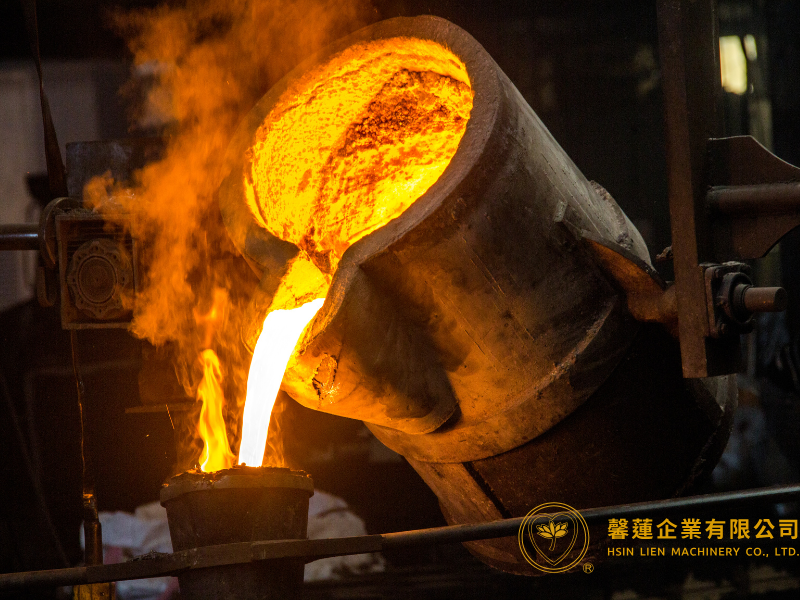
In industrial metal manufacturing, the casting process determines the quality, strength, and reliability of the final component. Two major casting methods—centrifugal casting and gravity casting—are widely used to produce metal parts of varying sizes and complexities. While both methods have their place, centrifugal casting provides distinct performance advantages that make it ideal for precision, high-strength, and corrosion-resistant applications.
This article explores the key differences between centrifugal and gravity casting, explaining how centrifugal casting achieves higher density, superior surface quality, and better structural integrity—especially for copper and bronze alloy components used in industrial and marine systems.
1. Process Overview
Gravity Casting
Gravity casting involves pouring molten metal into a stationary mold, where the material fills the cavity under the influence of gravity alone. The cooling and solidification occur naturally, resulting in a relatively simple process that is cost-effective for basic components. However, because the metal flow is uncontrolled and the filling rate depends solely on gravity, air entrapment and porosity are common, especially in complex shapes or thicker walls.
Centrifugal Casting
Centrifugal casting, on the other hand, uses rotational force to push molten metal toward the mold walls. As the mold spins at high speed, the metal forms a dense layer against the inner wall and solidifies under pressure. This process produces components with:
- Finer grain structure,
- Higher density and reduced porosity,
- Superior mechanical strength, and
- Uniform wall thickness.
2. Key Differences Between Centrifugal and Gravity Casting
| Feature | Gravity Casting | Centrifugal Casting |
|---|---|---|
| Filling Method | Relies on gravity; slower and uneven | Uses centrifugal force for uniform filling |
| Porosity | More internal voids and trapped gases | Minimal porosity due to outward pressure |
| Density | Variable across cross-section | High and consistent density throughout |
| Grain Structure | Coarse and random | Fine, directional grains aligned with stress paths |
| Wall Thickness Control | Hard to achieve uniform thickness | Excellent uniformity and dimensional stability |
| Surface Finish | Often rough; requires machining | Smooth as-cast surface with minimal finishing |
| Mechanical Strength | Moderate | Up to 30% higher due to compact structure |
| Material Utilization | Higher waste and gating loss | Better yield and reduced material waste |
These differences make centrifugal casting particularly suitable for critical industrial components that demand consistent mechanical and dimensional performance.
3. Metallurgical Advantages
The superior properties of centrifugal casting stem from its controlled solidification dynamics:
- Pressure-induced compaction: The centrifugal force (up to 60G) eliminates trapped air and drives impurities toward the inner surface, which can be machined off later.
- Directional solidification: Metal solidifies from the outside in, creating a fine-grained, defect-free microstructure.
- Enhanced metallurgical bonding: Continuous pressure during solidification improves cohesion at the molecular level, resulting in stronger and more fatigue-resistant parts.
Compared to gravity casting, which often exhibits uneven grain formation and shrinkage cavities, centrifugal casting produces homogeneous, high-integrity structures ideal for high-stress environments.
4. Material Compatibility
Centrifugal casting is widely used for non-ferrous alloys, particularly copper-based materials such as:
- Brass (Cu-Zn) — excellent for decorative hardware and general fittings.
- Tin Bronze (Cu-Sn) — provides high wear resistance and strength for bearings and gears.
- Phosphor Bronze (Cu-Sn-P) — offers elasticity and fatigue resistance for precision parts.
- Aluminum Bronze (Cu-Al) — highly corrosion-resistant, ideal for marine components.
- Cupro-Nickel (Cu-Ni) — outstanding resistance to seawater corrosion and biofouling.
These alloys benefit from the low-porosity and tight-grain structure achieved through centrifugal casting, extending their service life and improving reliability in industrial and marine applications.
5. Industrial Applications
Because of its superior mechanical and corrosion performance, centrifugal casting is widely used in demanding sectors such as:
- Marine engineering: propellers, pump housings, valve bodies, and bushings exposed to seawater.
- Industrial machinery: couplings, sleeves, and wear rings operating under heavy loads.
- Energy and water systems: corrosion-resistant fittings for pumps and piping.
- Precision hardware: components requiring high dimensional stability and aesthetic surface quality.
In contrast, gravity casting is often used for low-stress, large-volume parts where cost efficiency is the primary concern rather than structural precision.
6. Quality and Production Efficiency
Centrifugal casting offers several practical production advantages:
- Higher yield: reduced gating and riser waste.
- Lower defect rate: fewer rejections due to porosity or shrinkage.
- Improved machinability: smoother surfaces reduce tool wear and cycle time.
- Consistent reproducibility: stable process control ensures uniform quality across batches.
While gravity casting remains simpler and cheaper for non-critical parts, centrifugal casting provides a more cost-effective solution over time when quality, durability, and reliability are factored in.
7. Conclusion
Centrifugal casting outperforms gravity casting through superior metallurgical quality, structural integrity, and consistency. By applying centrifugal force, the process achieves denser, stronger, and more precise metal components that can withstand harsh industrial and marine environments.
Whether producing copper alloy bushings, valve housings, or pump impellers, centrifugal casting ensures optimal performance with reduced defects and longer service life—making it the preferred choice for high-performance manufacturing applications worldwide.